|
One of the strangest Nepenthes species in existence! Named after the prominent black nectar glands, this species also boasts maximum fuzziness and an incredible discovery story!
|
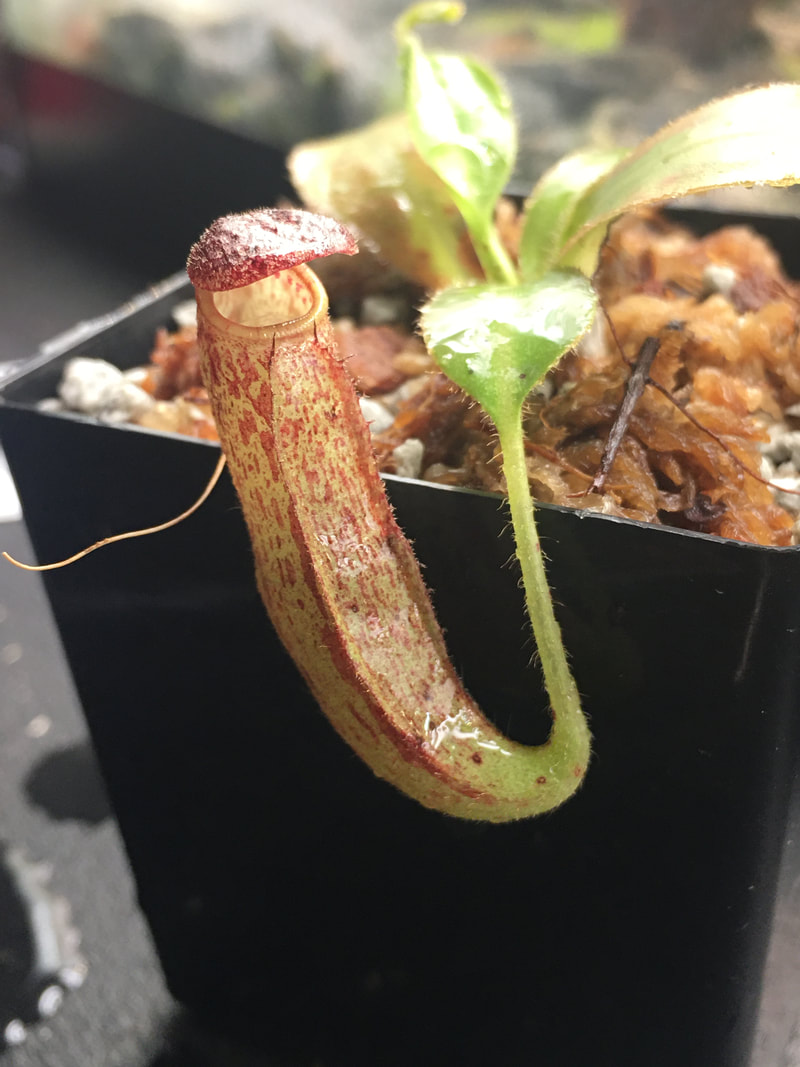
Cute little pitcher! November 2020
|
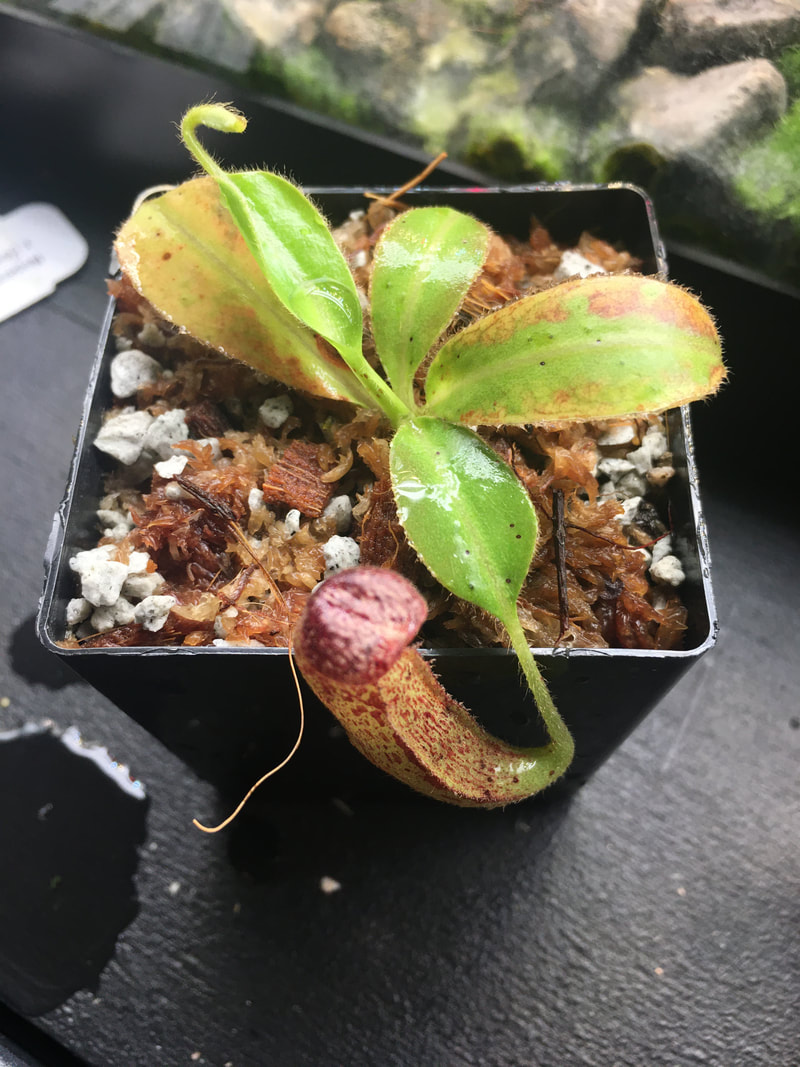
The black nectar glands dotting the plant at irregular intervals really do look like some kind of disease! November 2020
|
|
From Borneo Exotics : "An exceptionally robust species characterised by an abundance of nectar glands, showing as dark speckles throughout the pitchers tendrils and stem. When mature, these glands literally ooze nectar. The whole plant is covered with a thick bristly indumentum (hairs) and the both upper and lower pitchers are richly speckled in red on a creamy white or red flush background. Upper and lower pitchers differ greatly, with the lower pitchers being somewhat tubular and the upper pitchers conical. All different individuals from seed."
|
I received my medium plant from Carnivero in November 2020 as a birthday present from my mom (thanks Mom!) This intriguing species has a truly incredible discovery story, recounted below from Carnivero's website:
|
"Nepenthes glandulifera originates from the Hose Mountains of Sarawak. The mountain they live on is inaccessible and remote that Nepenthes researcher Chi’en Lee is the only person to have observed it in the wild (although there have been a couple reported cases of the plant growing epiphytically in the surrounding area with observers seeing them with binoculars). As the name suggests, Nepenthes glandulifera exhibits numerous black glands over the entirety of the plant (leaves, tendrils and pitchers). The glands serve as a nectar lure for crawling and flying insects and put out a sweet, honey-like fragrance that can fill up a greenhouse on warm, sunny days.
All plants in cultivation owe their lineage to a single mother plant (the type specimen) which was in bloom at the time of taxonomic collection. The seeds were placed into tissue culture by Malesiana Tropicals and an assortment of male and female clones were produced. Borneo Exotics then flowered out sibling plants from these clones and bred them. These plants are the progeny." |
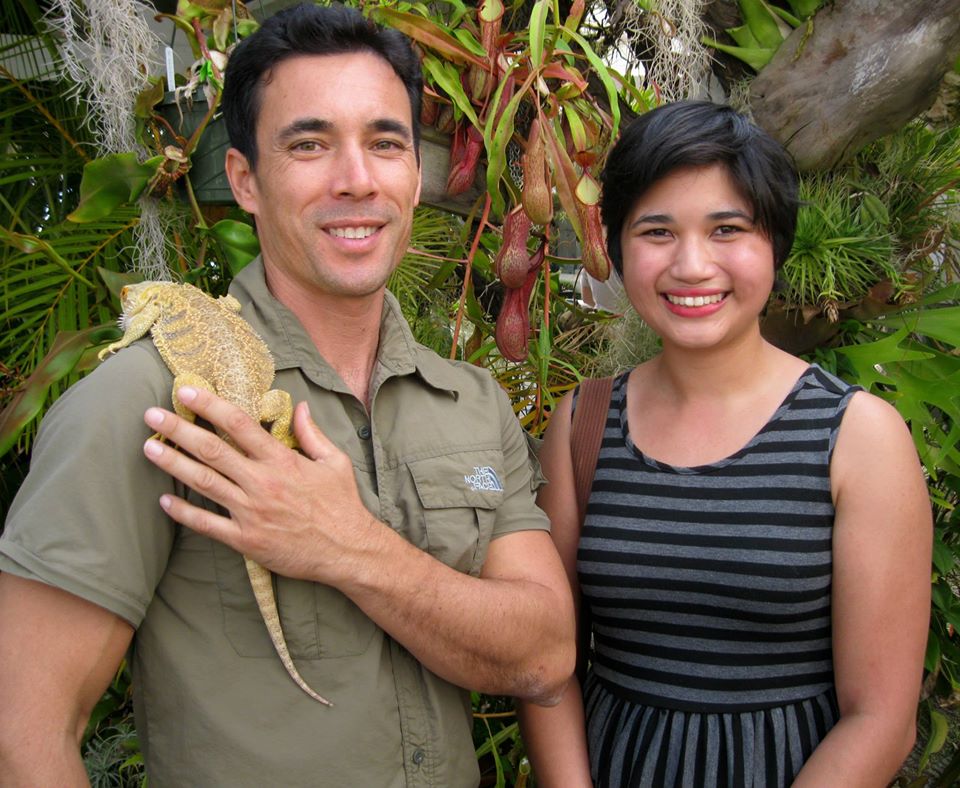
I am grateful that Chi'en Lee managed to retrieve the seeds from the original mother plant without hurting himself! I actually got to meet Chi'en Lee at a BACPS meeting held at California Carnivores several years ago. Here he is holding my pet bearded dragon, Weldon, hahaha.
Even at this young age, the strange black nectar glands are readily apparent. They are scattered irregularly all over the plant and really do look like they could be due to disease rather than a natural growth of the plant itself! They leaves are also pleasantly fuzzy and I look forward to it getting even hairier over time!
Update January 2021
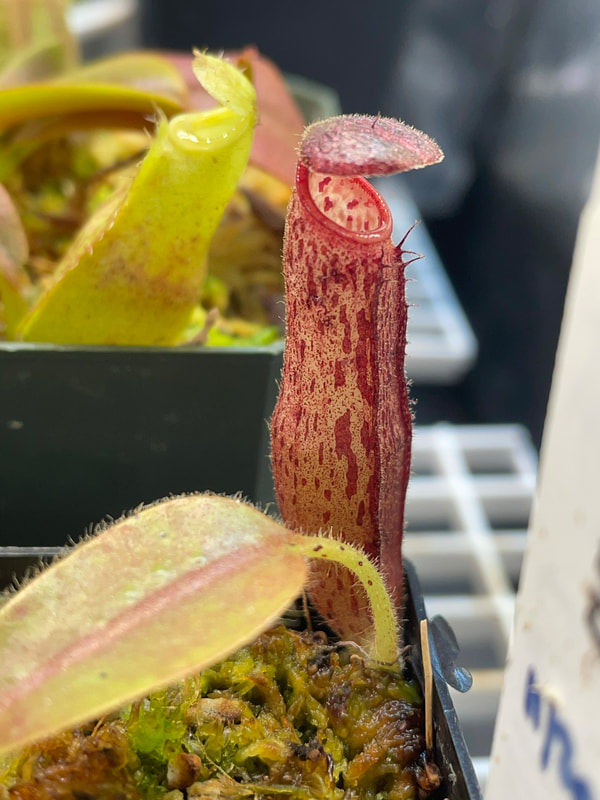
Two new pitchers already! VERY VIGOROUS in intermediate conditions!
February 2021
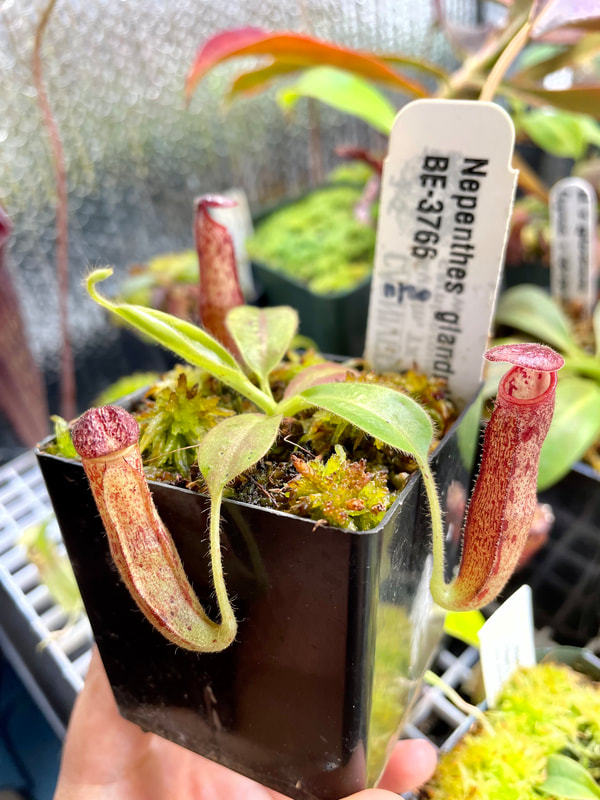
Growing very quickly!! Won't have to wait long to see larger pitchers :) Incredible pitcher to leaf ratio!!
Current Growing Conditions: Warm Intermediate Terrarium
Light: ~170 PPFD or 9730 Lux under 4000K LED shoplights
Humidity: ~90% night and 67% day
Temperature: ~68F night and 85F day
Water: Moist but not wet
Potting Mix: 50% long fibered sphagnum 50% perlite
Fertilizer: MaxSea (1/4 tsp/gallon) every other week into pitchers
Additional Notes: Very fast and vigorous grower in intermediate conditions!
Light: ~170 PPFD or 9730 Lux under 4000K LED shoplights
Humidity: ~90% night and 67% day
Temperature: ~68F night and 85F day
Water: Moist but not wet
Potting Mix: 50% long fibered sphagnum 50% perlite
Fertilizer: MaxSea (1/4 tsp/gallon) every other week into pitchers
Additional Notes: Very fast and vigorous grower in intermediate conditions!